
Pittsylvania Parole and Probation
Parole and probation both place a person in the community under rules, but they arise in different ways. Parole is conditional release from an incarceration term that is legally eligible for parole. The Virginia Parole Board makes the parole decision. A VADOC district office then handles day-to-day supervision. Probation comes from a court order. A judge may impose it instead of active incarceration, after a jail or prison term, or with suspended time. Suspended time is a part of the sentence that is not served unless the court later revokes it.
Virginia ended routine discretionary parole for felony offenses committed on or after January 1, 1995. Older and specially eligible sentences remain subject to their own rules, so an offense date and sentencing order matter. A person on either status has left confinement for the relevant episode, yet has not reached full discharge. Discharge means the legal supervision term has ended. The comparison below keeps the decision source, supervising source, and proof separate.
| Point | Parole | Probation |
|---|---|---|
| How it starts | Conditional release under an eligible incarceration sentence | A judge orders community supervision, often with suspended time |
| Decision source | Virginia Parole Board or the sentence framework | Sentencing court |
| Local supervisor | VADOC Community Corrections | VADOC Community Corrections |
| Best records | Board action, release papers, locator, and district record | Sentencing order, locator, and district record |
| End point | Formal discharge or expiration under the governing order | Court-ordered term ends or the court formally changes it |
- Parole
- Conditional community release from an eligible prison term.
- Probation
- Court-ordered supervision in the community.
- Absconder
- A person alleged to have stopped reporting or left supervision without permission.
- Discharge
- The formal end of custody and supervision for the term at issue.
Verify Pittsylvania Post-Release Supervision
The VADOC Inmate and Supervisee Locator is the public starting point because its stated coverage includes probationers and parolees assigned to district offices. It is not a full archive of everyone once supervised. Search with the seven-digit DOC ID when known. Otherwise, enter the first three letters of the first name and the full last name. Optional location, race, gender, and age-range filters can narrow a common name. Compare identifiers before treating the result as the same person.
A current district entry establishes community supervision, not full discharge. The locator updates daily and VADOC warns that information may be stale or wrong. A missing result can mean the person is fully discharged, was never state-responsible, falls outside the public population, or was entered under different data. Use the following sequence, then keep the exact source labels in any notes.
- Fix the identity with a DOC ID, full name, court case, and sentence date.
- Search the VADOC locator and open only a detail that matches the known identifiers.
- Record the status, district or location, and date labels exactly as shown.
- Read the Pittsylvania sentencing order to determine whether probation was imposed.
- For parole, check the Board decision source, then confirm supervision with the listed VADOC office.
- Ask the office about current reporting or discharge only when authorized and appropriate.
The official VADOC locator is shown in the successful project capture below.
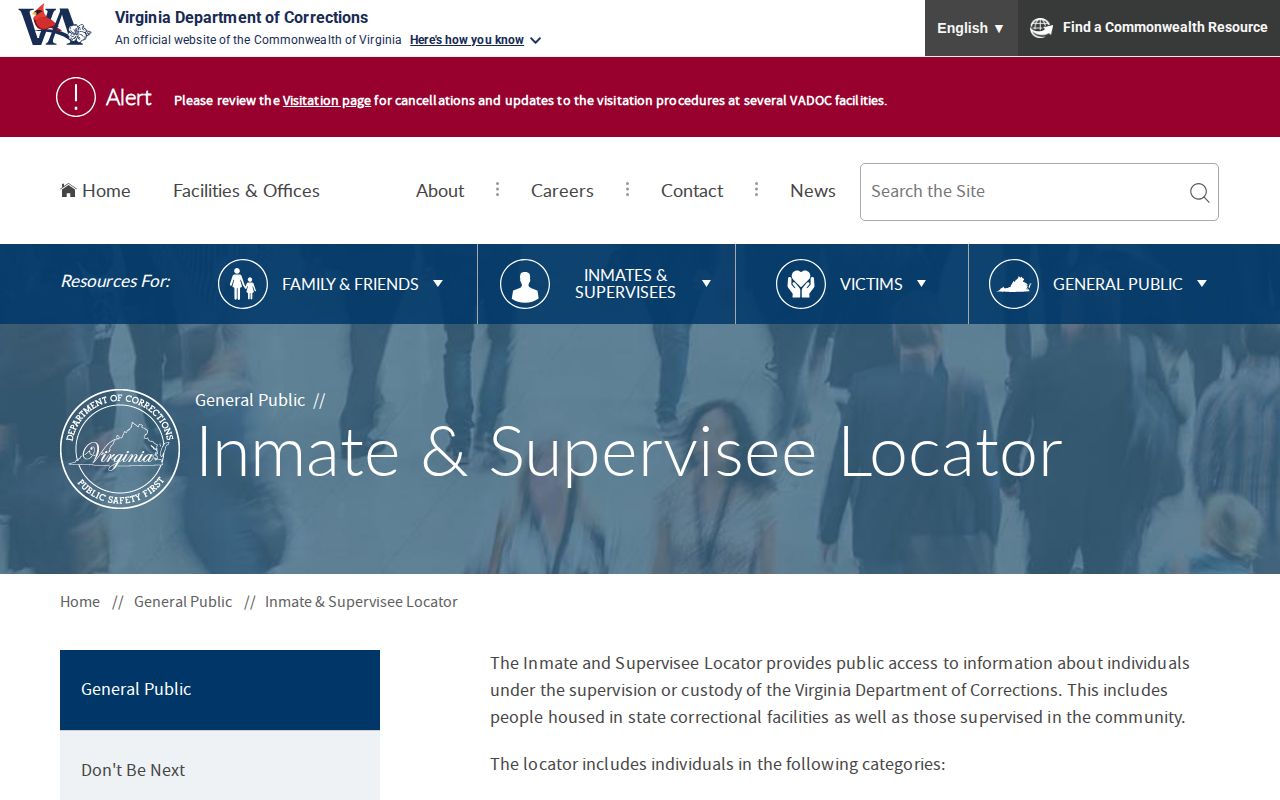
Its search fields support identity matching, while the returned office and status still need confirmation from the responsible record source.
Note: A current supervision result confirms community status, while a blank result is not proof of completed discharge.
Pittsylvania Supervision at District 14
VADOC's current office directory assigns Pittsylvania County to Danville Probation and Parole District 14. District 17 serves Abingdon and is not the local office for this county. A locator detail may name a different district if the person lives elsewhere, transferred supervision, or has a case tied to another area. Use the office shown on the current record rather than selecting an office solely from the county of conviction.
The VADOC facilities and offices directory is the official route for checking the assignment and current contact details. The local resource directory also identifies District 14 as serving Danville and Pittsylvania County.
Danville Probation and Parole District 14
211 NorDan Drive, Suite 1080
Danville, VA 24540
434-791-5231
Contact the district when a current VADOC record lists that office and the question concerns reporting, conditions, or whether a formal discharge is recorded. Staff may limit what they disclose. The court clerk remains the source for the signed sentencing order, while the Board is the source for a parole vote.
Pittsylvania Parole Decisions Are Separate
The Virginia Parole Board makes parole decisions; District 14 does not. Since July 1, 2024, final deliberation and votes occur in public meetings. The Board public-meetings page provides upcoming meetings, agendas when posted, and past minutes. Dates are meeting-specific, not a fixed weekly or monthly schedule. The separate monthly decision reports publish actions and reasons under Code § 53.1-136.
A grant is a decision, not a jail-door timestamp. Release-plan approval, a detainer, and VADOC processing may still stand between the vote and departure. A detainer is a request or order from another agency that may require continued custody or transfer. Keep four events distinct: the Board decision, an advance notice, the signed release event, and the start of community supervision. Only the later release record confirms that VADOC custody ended.
The monthly decision archive and the meeting calendar serve different purposes. The calendar documents when final deliberation is scheduled and preserves minutes from past meetings. The monthly reports state Board actions and reasons, but they are not an interactive name locator. For a Pittsylvania case, use the decision record to establish what the Board did, the VADOC locator to identify a current district assignment, and the release papers to establish when confinement ended. If a report says consideration was deferred, the person has not received a grant merely because the case appeared before the Board.
The Board's official meeting page appears in this project image.

The calendar is useful for locating a decision stage, but it must be paired with VADOC release and supervision records.
Pittsylvania Supervision and Violations
Conditions are the rules stated in an order or supervision document. They may involve reporting, approved travel, treatment, or other case-specific duties. Do not infer a person's exact conditions from general VADOC material. Read the signed Conditions of Probation or Conditions of Parole when access is proper, and use the sentencing order to understand any suspended term. The supervising district can explain procedure but does not replace the text of the order.
An alleged violation also does not prove a warrant. A missed appointment, old locator entry, or rumor cannot establish absconder status. Confirm the source and date with District 14, then check the relevant Pittsylvania court record for a capias, violation filing, hearing, or revocation order. A capias is a court command to take a person into custody. Revocation is a later court or Board action that can change or end conditional release. Each is a separate event.
Pittsylvania General District Court may hold misdemeanor and early felony records, while Circuit Court holds felony dispositions and related sentencing orders. Match the case number and charge before drawing a conclusion. A violation filing shows an allegation; a hearing records process; a signed revocation order states the result. The jail or VADOC then records any return to custody. This chain prevents a court event from being misread as a completed physical move.
Note: Use the current district record and court event together because each answers a different part of the supervision question.
VADOC Release Property and Funds
VADOC's state-prison release process includes practical steps that are distinct from Pittsylvania County Jail procedure. The VADOC Facility Release information says staff return personal property and use a property-envelope receipt for identity and education documents. Account funds are returned, and VADOC may supplement a balance below $25 under its stated rule. Clothing, transportation, and medication may also be provided under the applicable policy.
These facts apply to a VADOC facility release, not a release from the courthouse jail or a BRRJA site. They help explain what may happen just before a parolee begins supervision with District 14. The signed Order of Release and Conditions documents carry more weight than an expected date. Staff and the person sign and date applicable documents, which ties the release event to the terms that follow.
Pittsylvania Supervision Ends at Discharge
Full discharge should be supported by a formal record, not merely the absence of a name online. For probation, the court order and any later modification or revocation record define the term. For parole, use the governing release papers and VADOC record. When the locator no longer returns a person, request the relevant inactive record or discharge confirmation through VADOC if the question requires a durable answer.
The Pittsylvania County released inmate search path helps distinguish local jail release, state custody, and transfer when the first question is where the person went. That distinction matters here. Someone can be released from prison to District 14 supervision, transferred to another custodian, or fully discharged. Only the first is current post-release supervision.